
Most of us assume someone will be there when we pass away — to handle our affairs, carry out our wishes, or sit in the front row at our service.
But for some, that’s not the case.
Many people die without close family. They may have outlived relatives, become estranged, or simply never had children or siblings. It’s an uncomfortable reality to think about — but it’s also an important one.
The good news? Even when someone dies alone, the process that follows is structured, documented, and handled with care.
Still, a little planning can make all the difference.
When Someone Dies Without Immediate Family
If a person dies without a clear next of kin, a few questions need to be answered quickly:
- Who are they?
- Did they leave a will?
- Is anyone legally authorized to step in?
Local authorities are typically notified first. If the individual was known to neighbors, caregivers, or a residential facility, officials attempt to locate relatives or close contacts.
If no one can be found, a public administrator or court-appointed representative is assigned to manage the estate.
If the person was a Veteran, eligibility for VA burial benefits is also reviewed. In many cases, veterans may still receive burial in a national cemetery, a grave marker, and military honors — even if no family is present.
Even without loved ones nearby, there are systems in place to ensure dignity and legal oversight.
What Happens to Their Belongings?
If someone dies without a will, they are considered to have died intestate. That means state law determines who inherits their property.
Officials may:
- Search for distant relatives
- Hire genealogical researchers or heir-tracing services
- Open a probate case to distribute assets
If no heirs are found, remaining assets may ultimately pass to the state.
Personal belongings are inventoried. If unclaimed, they may be donated, sold to cover final expenses, or respectfully disposed of.
Without clear instructions, decisions are made by default systems — not personal choice.
Who Makes Decisions About the Body?
Each state has its own process for handling unclaimed remains. Typically:
- The coroner or medical examiner attempts to notify next of kin.
- If no one comes forward within a designated timeframe (often 30–60 days), the county assumes responsibility.
- Burial or cremation is arranged through a local agency or contracted funeral home.
Cremation is often chosen for public cases due to cost and logistics. If written burial preferences exist in a will or advance directive — and funding is available — those wishes may still be honored.
But without documentation, personal preferences can easily be lost.
What Happens to Unclaimed Ashes?
If cremation occurs and no one claims the remains, ashes are typically held for a period of time. After that, they may be:
- Interred in a shared grave or mausoleum
- Scattered in a designated area
- Buried in a simple urn in a public cemetery
Records are kept in case someone comes forward later. Even when no family is present, care is taken to preserve dignity.
What If the Person Had No Identification?
Most individuals are identified, even without family. Medical examiners use:
- Fingerprints
- Dental records
- Medical implants
- Tattoos
If identification is confirmed but no relatives are located, the person is considered unclaimed and the standard process continues.
If identification cannot be established, the individual may be buried or cremated under a “John Doe” or “Jane Doe” designation — with records carefully maintained.
Even in the most difficult cases, respect remains a priority.
Leaving a Legacy — Even Without Close Family
If you don’t have immediate family, planning becomes even more powerful.
It allows you to decide:
- Who receives your belongings
- Who carries out your wishes
- How you’re remembered
- What happens to your digital life
- Who can access important information
Without documentation, the state decides. With planning, you decide.
Here are meaningful steps you can take:
- Write a Will
You can leave your estate to friends, neighbors, charitable organizations, or faith communities. A legally binding will creates clarity where there might otherwise be confusion. - Create a Living Will
Outline your medical preferences in case you become incapacitated. - Choose a Trusted Executor or Delegate
Appoint someone you trust — a friend, advisor, or professional — to carry out your wishes. - Document Funeral Preferences
Specify cremation or burial, memorial preferences, or instructions for your remains. - Organize Your Digital Life
From email and banking to social media and streaming accounts, your digital footprint matters. Leaving instructions — and secure access — prevents frustration and guesswork later. - Keep Everything Secure and Accessible
Your documents only help if they can be found.
Peace of Mind Starts with a Plan — and the Right Support
Estate planning is often delayed — especially by people who feel they don’t have “enough” assets or close family to justify it.
But planning isn’t about how much you have.
It’s about leaving clarity instead of chaos.
Without a plan, the state decides. With a plan, you decide.
The good news? It doesn’t have to be overwhelming, expensive, or complicated.
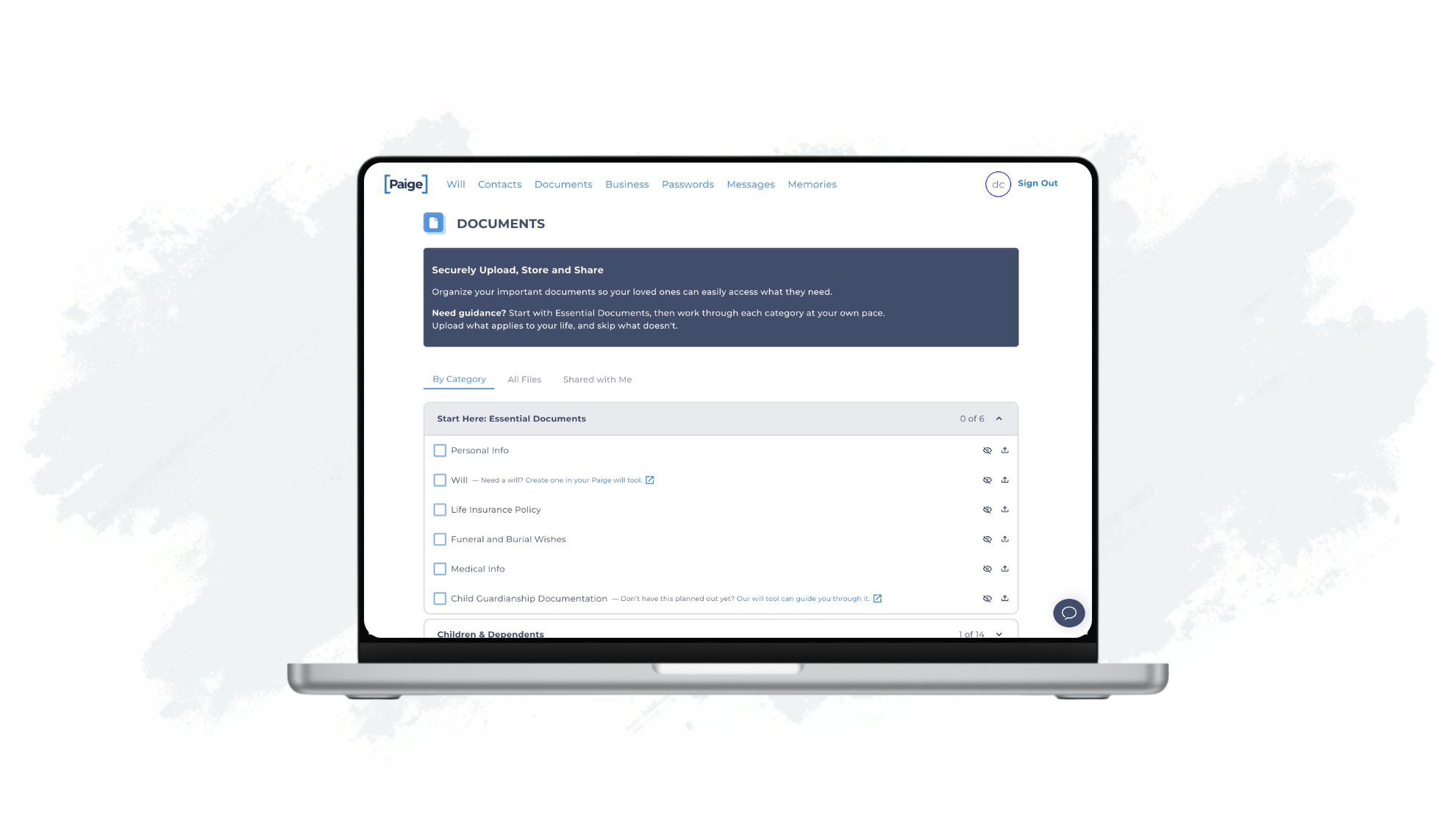
Paige was built to make estate planning simple, secure, and approachable. Instead of navigating confusing legal processes or wondering where to store important information, Paige walks you through it step by step — like a trusted guide at your side.
With Paige, you can:
- Create a legally binding will in minutes
- Securely store important documents in one organized place
- Manage passwords and digital accounts safely
- Assign trusted delegates who can access information when needed
- Record personal messages and preserve your story
Everything is protected with bank-grade security and designed to be easy to use — so you can focus on what matters most, not paperwork.
You don’t need a large family to deserve a well-organized legacy. You don’t need complicated assets to justify having your wishes honored.
You just need a plan.
And with the right tools, creating that plan can feel empowering instead of intimidating.
Start your will today—and give your legacy the clarity it deserves.
Get started with Paige →