
Most people don’t grow up imagining their own funeral. It’s not a conversation that comes easily.
But for many families, having clear plans in place becomes an unexpected gift — one that replaces uncertainty with guidance and brings calm to an emotional time.
Planning your funeral isn’t about control for its own sake. It’s about care. It’s about making sure your life is honored in a way that feels authentic to you — while easing the burden on the people you love.
If you’re considering putting your wishes in writing, here are a few meaningful ways to approach it.
1. Share Something Personal
Small, thoughtful details often leave the strongest impression.
If there’s something that represents you — a favorite recipe, a meaningful quote, a poem you love, or even seed packets for the garden you cared for — documenting those ideas can help shape a service that feels personal and warm.
These touches don’t need to be elaborate. They simply need to feel true to you.
2. Reflect Your Interests and Values
A funeral or memorial service can reflect the life that came before it.
Consider noting:
- Music that holds special meaning
- Readings or spiritual elements you value
- Photos or videos you would like included
- Hobbies, collections, or passions that could be displayed
Whether your style is traditional and formal or simple and relaxed, outlining your preferences ensures the service reflects your personality — not just a standard template.
3. Encourage Connection
Gatherings after a service often become the space where stories are shared and healing begins.
If you would like a reception, celebration of life, or informal gathering, you can include that in your plan. You might suggest a favorite location, a meaningful meal, or simply encourage loved ones to share memories together.
By documenting this intention, you help create space for connection — something families deeply value.
4. Consider a Lasting Memorial
For some families, having a permanent place or object of remembrance brings comfort in the years that follow.
You might outline preferences for:
- Burial or cremation
- A specific cemetery or memorial location
- An urn or headstone style
- Memorial donations to a meaningful organization
Clear guidance ensures decisions align with your wishes and values.
A Simple Starting Checklist
If planning feels overwhelming, start small. You can begin by documenting:
- Burial or cremation preference
- Type of service (religious, non-religious, private, celebration of life)
- Location preferences
- Music or readings
- Reception plans
- Memorial preferences
- Budget considerations, if applicable
You don’t have to finalize everything at once. Even broad guidance can make a significant difference.
Keep Your Plans Secure and Accessible
Writing down your wishes is an important step. Making sure the right people can access them when needed is just as important.
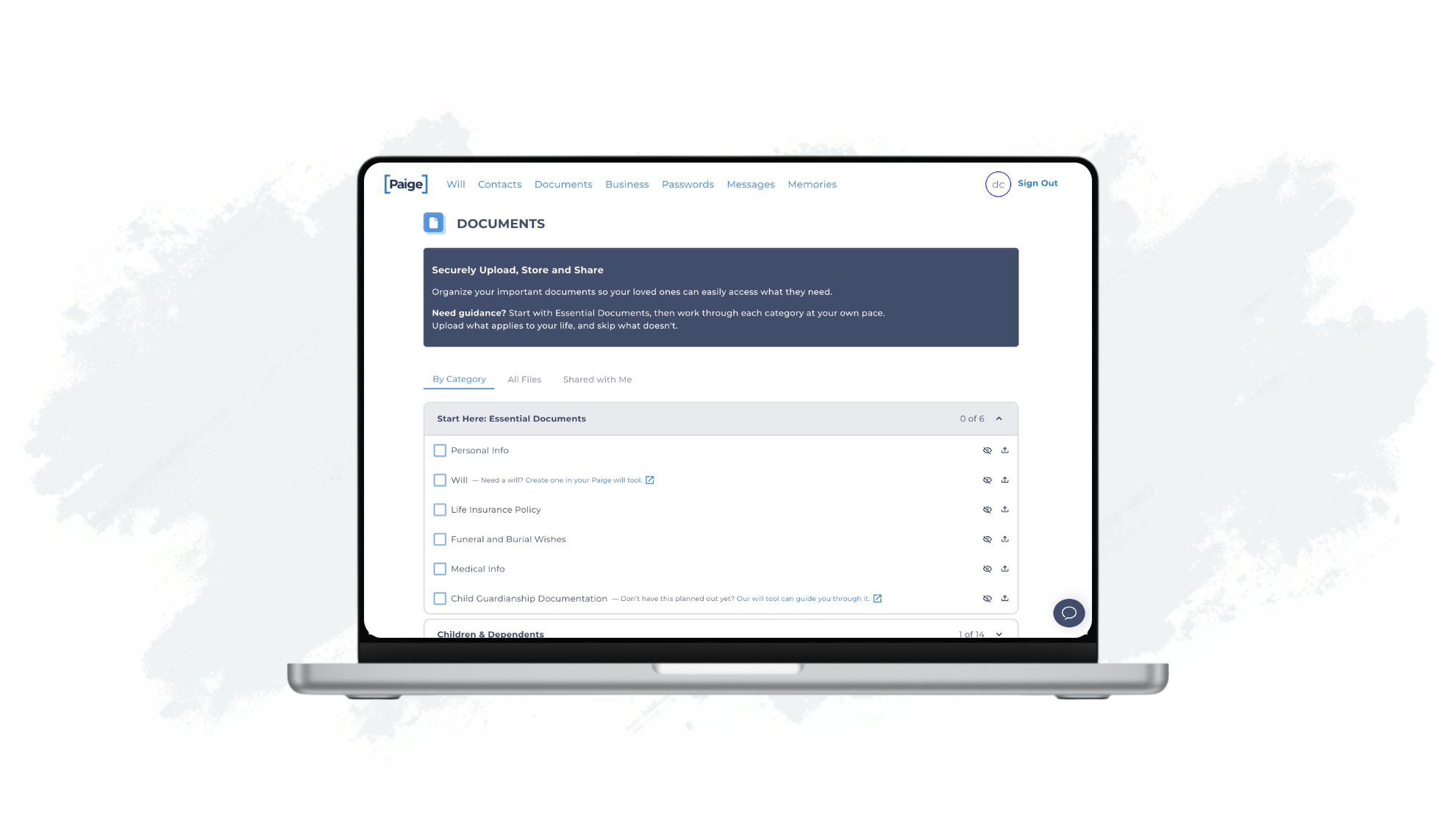
With Paige, you can securely store your funeral preferences alongside your will, estate documents, key contacts, and important records — all in one protected place. You can grant access to trusted delegates so your plans are clear and easy to follow when the time comes.
Planning ahead is not about focusing on the end. It’s about making things easier for your loved ones and ensuring your legacy reflects who you are.
Secure Today, Ensure Tomorrow.